
I am prepping for a class/workshop I will be teaching on Saturday, R-W-B Boise quilt for Blackstone Valley Heritage Quilters. See the quilt below!
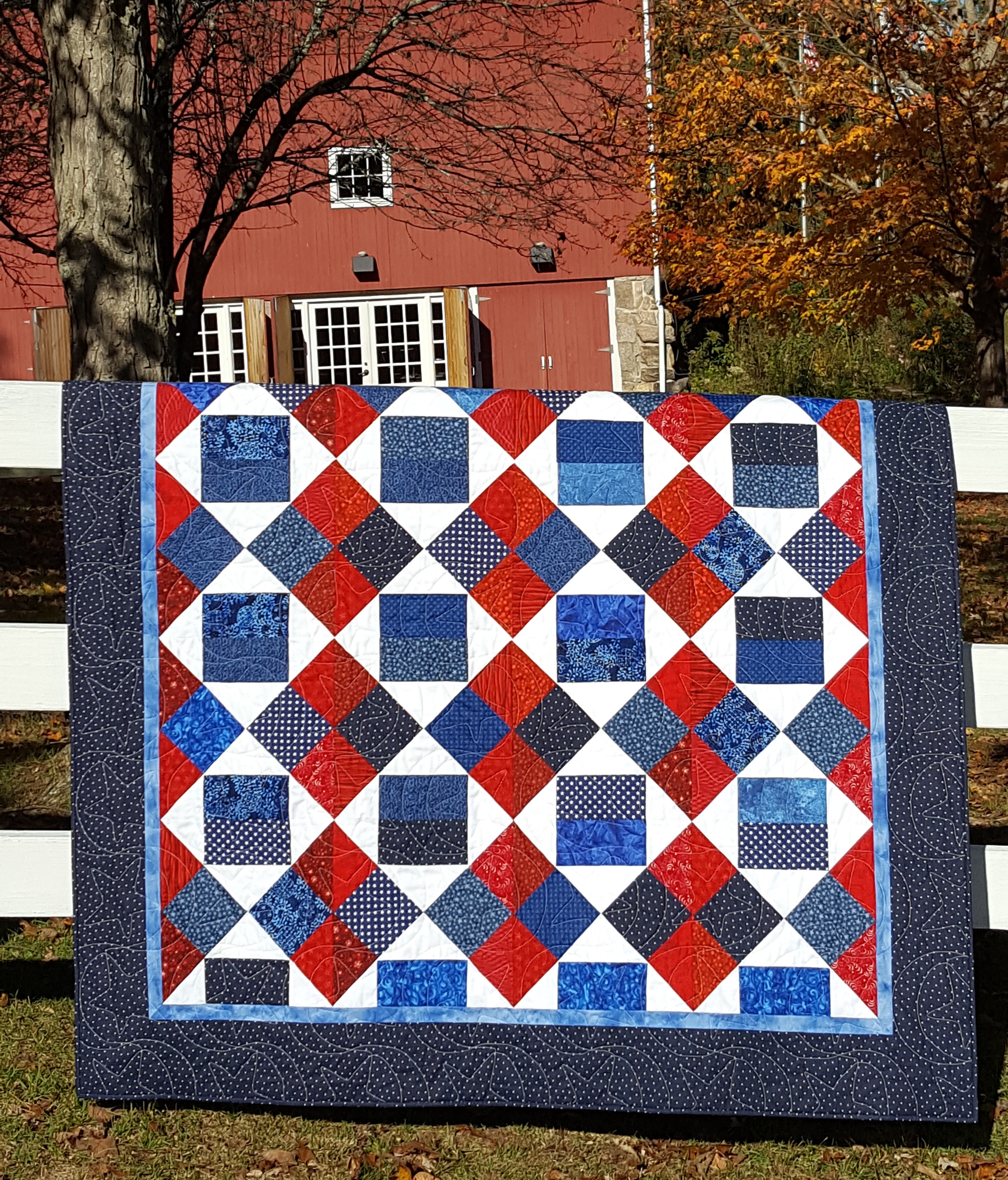
I’ve decided to make my sample quilt using some of my plaid collection/stash. It will be Christmas colors in red and green plaids. In searching through my stash, I found small-ish fabrics I want to include but they were not quite big enough. So what is a quilter to do? I have some tricks to cut the quarter square triangles I need. Not from a square and cut diagonally twice as I’ve done in the instructions…but rather improvise with what I have on hand.
So traditionally in cutting quarter-square triangles, you cut a square and then cut it diagonally twice, as shown below.


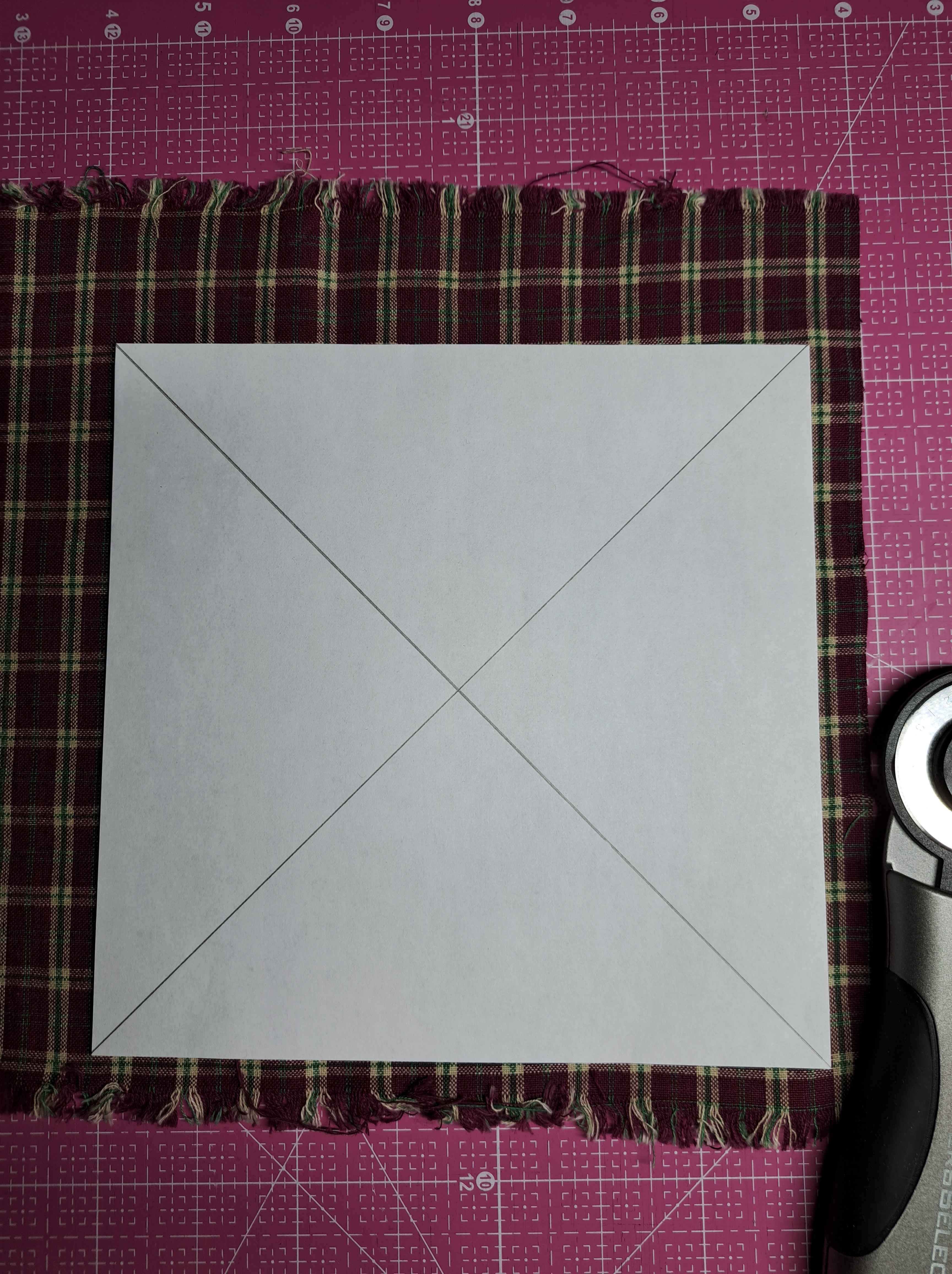
BUT when the fabric you want to use is not large enough, what can be done? Cut a piece of paper the size required and draw the diagonal lines. Then cut that apart and you have smaller pieces that can be placed on your “chunks” of fabric. The left image below is the paper shown on a piece of fabric, it fits! Then on the right, the paper is shown on a piece that isn’t big enough. Dang!
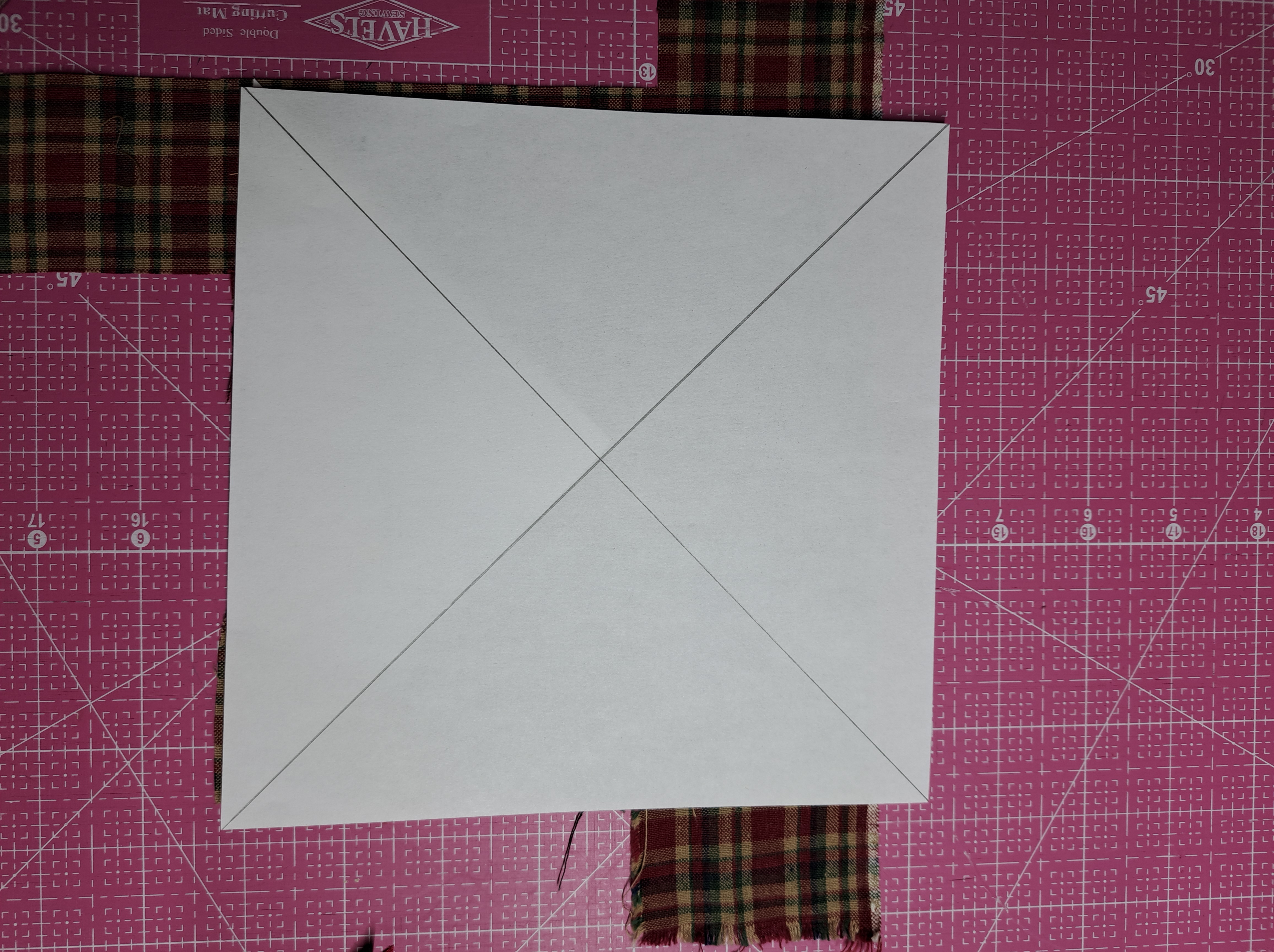
Here is an example of how I can get two of the quarter square triangles from the “chunk” of fabric shown above! It does not get me 4 of the same fabric but two will work in the design and I can find another fabric to cut two more triangles from to increase the numbers needed!

And I had a strip of another fabric just wide enough to get 4 quarter square triangles of the same fabric, SCORE! Also shown is other quarter square triangles already cut, stacked, and ready to use.

Why go through the trouble of placing the pieces as I did on the “chunks” of fabric?….I want the longest triangle edge to be on the straight-of-grain. That edge will have the least amount of stretch and will help the block stay “square”.
Now back to cutting and prepping/sewing some sections of the blocks needed! Those of you in class on Saturday, you just got a sneak peek!
Tip #1 – Make a paper template of the pieces you want to cut from “chunks” of fabric….when there isn’t quite enough.
Tip #2 – When making quarter square triangles the longest edge of the triangle is on the straight-of-grain. This will help to stabilize the edge of the block or unit you are sewing. Quarter square triangles are often used in flying geese.
in quilting,
Debbie
P.S. If you are going to Daytona Beach, be sure to sign up for classes, soon! Many are filling up! Done by Three with Fat Quarters is FULL already!!
 DebbieWendt's Blog