
Well it happens! I have an Oops! on Never Strikes Twice uses ONE Fat Quarter per “strike”, (not a Fat 1/8th). Cut 6 strips per Fat Quarter (width of strips in directions), (not 3). I double and triple check. My apologies if you had to buy more fabric to make this quilt. I have added this information to my website on this pattern’s page. Please make these changes on your pattern. I will be re-printing and the corrected pattern will give the corrected date.
The new project I am working on is a Curved Log Cabin. I love the optical illusion of a curve with just a straight strips! The shine of the silver printed fabrics sure plays with the camera focus. It is fun and glitzy for Christmas.

I will be teaching this quilt as a workshop for the Blackstone Valley Heritage Quilters on Dec. 7th. If you are in the guild, you’ll get first dibs on signing up for the workshop. If you are not in the guild and want to take the workshop, they will open it up if there is still space in another month.
I took some photos while sewing the table runner. I use very few pins when piecing. My steps are below…
I lined up the first edges of the seam and place a pin near the end to keep the ends lined up. As I approach the end of the seam, I leave the pin in until I get close and remove it.

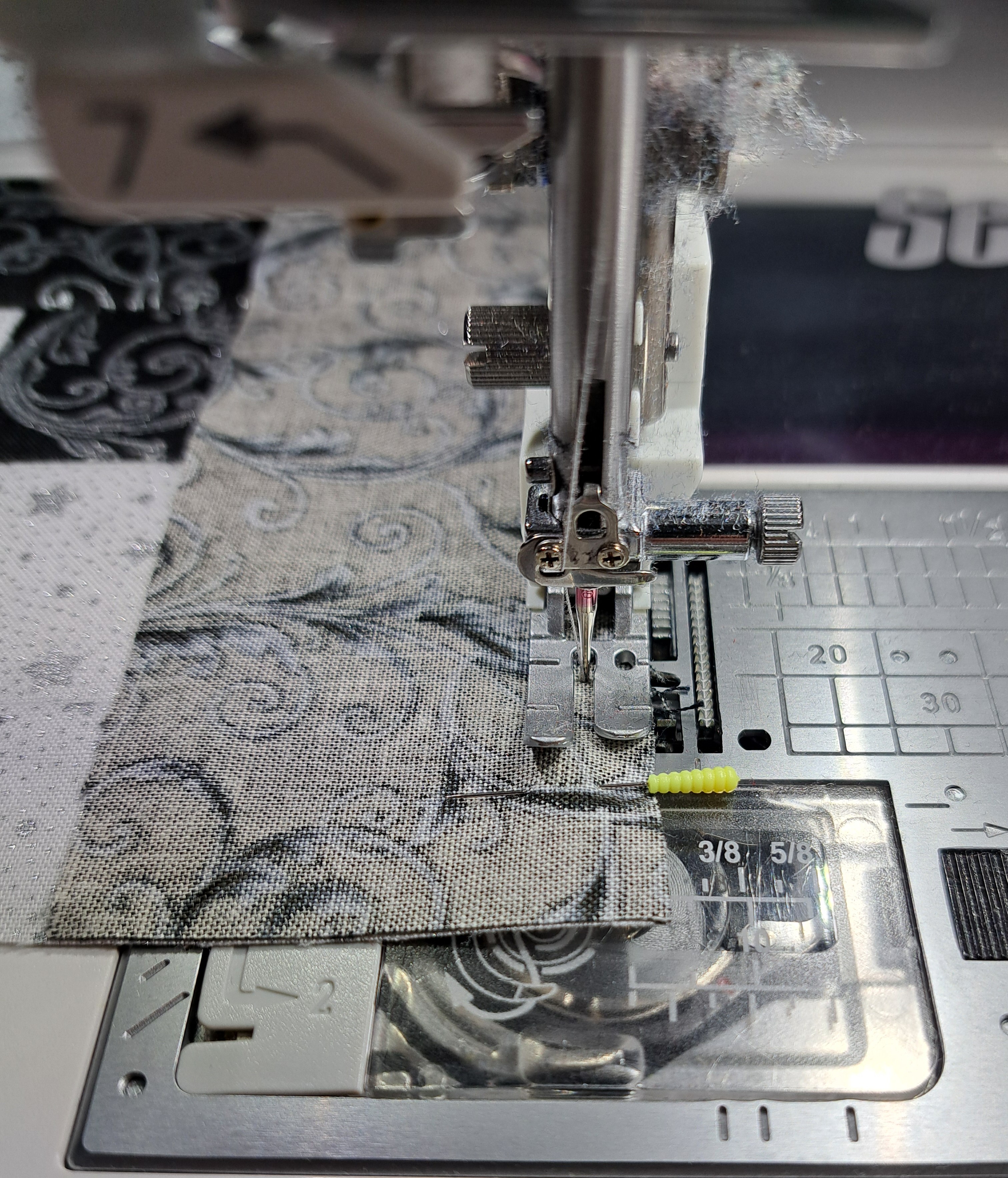

I am careful to not sew over pins! I also take care in finishing the seam so it stays the 1/4″ seam allowance and does not wiggle out of line. I use an “ender” between seams when I’m done and ready to start my next round of seams.
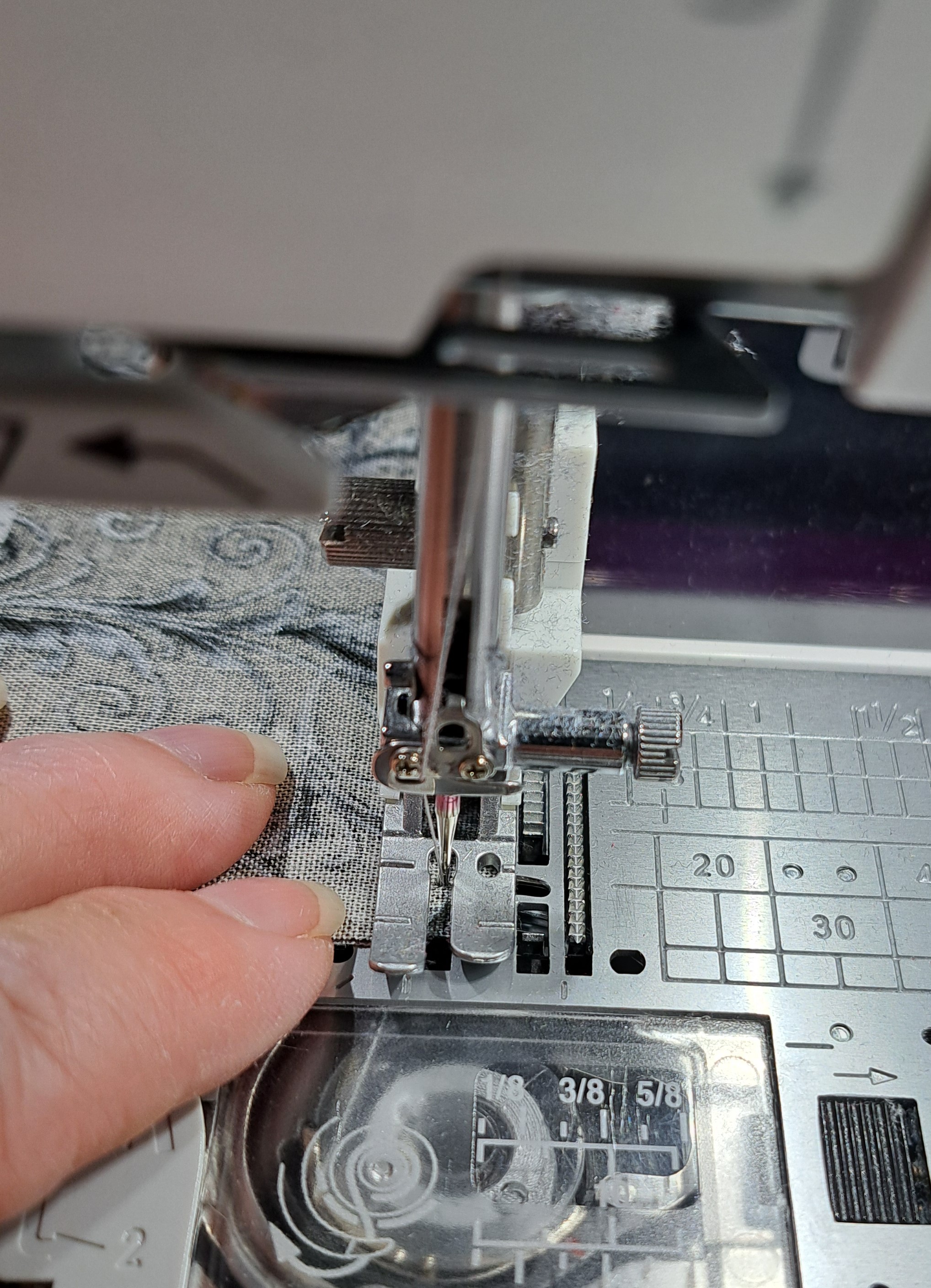
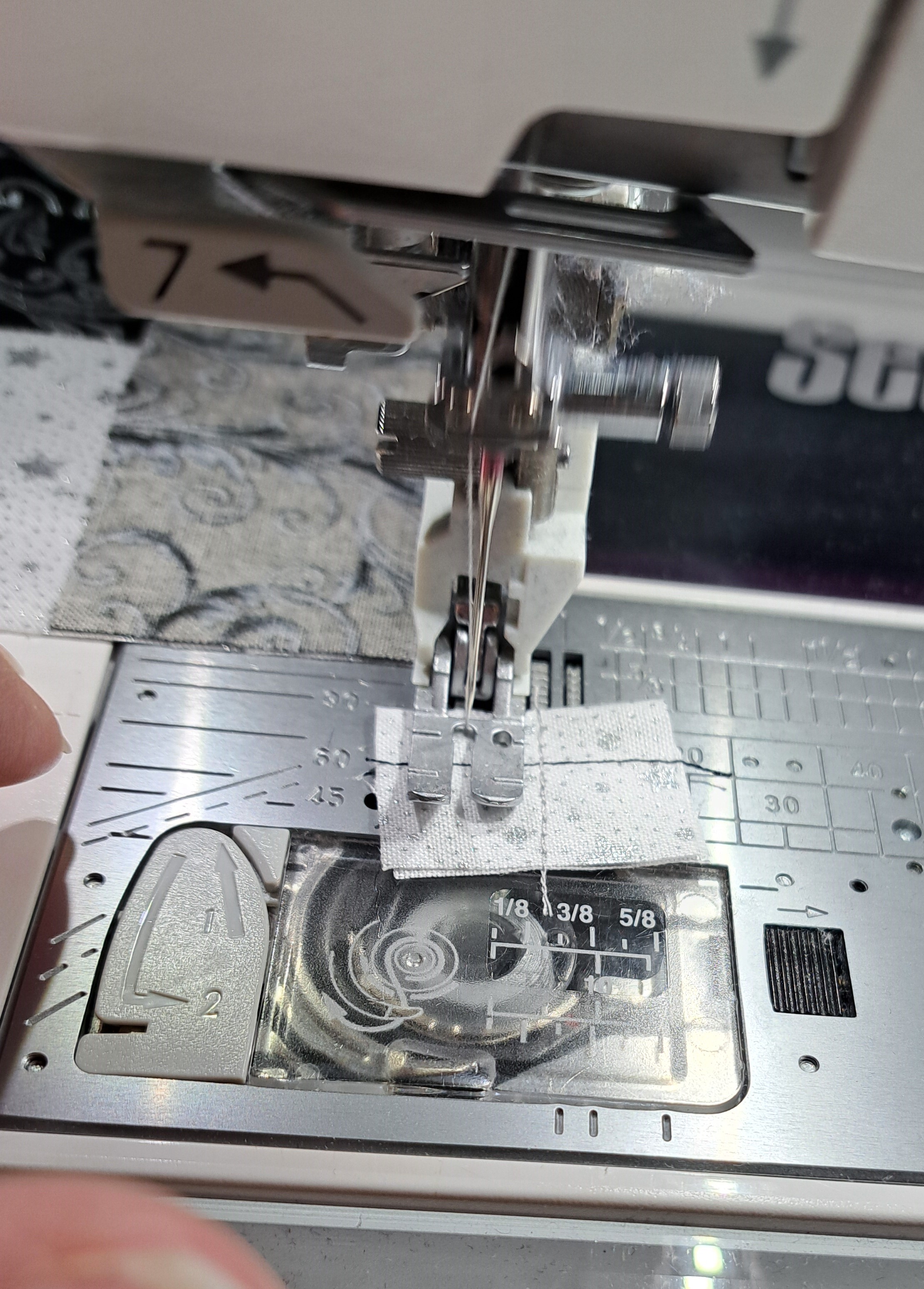
Oh my….did you see the thread lint a couple photos above….I need to clean my machine!
I’m looking forward to the workshop and sharing more tips and tricks in sewing curved log cabin blocks! I’ve started a quilt with different fabrics…stay tuned!
Tips –
#1 – Do NOT sew over pins! Remove them BEFORE you get to them. If you sew too close, it might be difficult to remove, plan ahead!
#2 – “Leaders” and “enders” help save thread and keep the line moving!
bonus – Clean your machine when you start seeing lint and between projects (even if you don’t SEE lint, it is hiding in the bobbin area)
in quilting,
Debbie
 DebbieWendt's Blog